Source 2 tier multifunctional iron bed frame for Hotels, Dorms, Guest Rooms
Compare 30 listings for the 2 tier multifunctional iron bed frame featuring metal construction, powder-coated finishes, and varying sizes. Buyers can evaluate specifications like weight capacity, assembly options, and customization availability from suppliers in China.
Key considerations
Products List


Comprehensive Sourcing Guide
2 Tier Multifunctional Iron Bed Frame Sourcing Guide
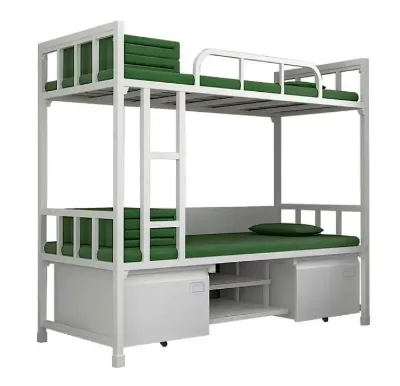
Sourcing a 2-tier multifunctional iron bed frame requires a careful balance between structural integrity, material durability, and functional versatility. These beds are frequently utilized in environments where space efficiency is paramount, such as student dormitories, military barracks, and budget-conscious hotels. The "multifunctional" aspect often implies features like integrated storage, convertible layouts, or compatibility with various mattress types, while the "iron" or metal construction ensures a robust framework capable of supporting significant weight. Buyers must navigate a market where product attributes vary widely, from single to double configurations, and from fixed to adjustable heights, making precise specification verification critical before placing orders.
The procurement process for these frames involves evaluating a diverse range of supplier offerings, many of which originate from manufacturing hubs in China, particularly in regions like Anhui. The observed market data indicates a broad price range and varying minimum order quantities (MOQs), reflecting the disparity between basic industrial-grade frames and more customized, premium designs. Understanding the specific needs of your end-user—whether they prioritize portability, aesthetic style, or maximum load capacity—is essential to filtering through the available options. This guide provides a structured approach to evaluating these products, ensuring that the selected bed frame meets both technical requirements and commercial viability.
Product Scope and Observed Listing Signals
The current market landscape for metal bed frames reveals a significant diversity in product specifications, which can complicate the sourcing process for buyers seeking a specific "2-tier multifunctional" solution. Observed listings include models with dimensions such as 2000L900W1950H mm, indicating a focus on substantial footprint and height, which may be relevant for loft-style or high-clearance designs. The material composition is predominantly metal, with some listings specifying powder-coated finishes to enhance corrosion resistance and aesthetic appeal. However, buyers should note that some products also incorporate wood components, such as poplar multi-layer board or birch, suggesting a hybrid construction that may offer different structural or acoustic properties compared to all-metal frames.
Attributes such as "Folded" or "Unfolded" status, along with "Disassembly" capabilities, are critical indicators of the product's logistical and functional profile. Some frames are designed for easy disassembly, which is advantageous for shipping efficiency and on-site assembly in constrained spaces, while others are described as "Undisassembly," implying a more permanent, rigid structure. The "Kind" of bed is often listed as "Flat Bed" or "Platform Bed," and the "Shape" can vary from square to round, although square is more common for standard bunk or loft configurations. Buyers must carefully cross-reference these attributes to ensure the product aligns with the intended use case, as a "Round" shape may not be suitable for a traditional 2-tier bunk setup.
Technical Specifications to Verify
When evaluating technical specifications, the maximum weight capacity is a primary safety and performance metric. Observed data indicates weight capacities ranging from 250-400kg, which is a crucial factor for ensuring the bed can safely support occupants and any additional loads, such as storage items. Buyers should verify the specific load-bearing design of the frame, including the thickness of the metal tubes and the quality of the welds, as these directly impact the frame's longevity and safety. Additionally, the "Height Adjustable" attribute varies across listings, with some frames being "Adjustable" and others "Unadjustable," which affects the flexibility of the installation and the clearance available underneath the bed.
The product model numbers, such as XS-BF-05, XS-BF-06, and XY-TB04, serve as unique identifiers for specific configurations, but buyers should not rely solely on these codes without verifying the associated dimensions and materials. Standard specifications like 11010520 or 16011020 may refer to packaging dimensions or component sizes, which are important for calculating shipping volume and storage requirements. Furthermore, the "Finish Type," such as powder coating, plays a significant role in the frame's resistance to wear and tear, especially in high-traffic environments. Buyers should request detailed technical drawings or material certificates to confirm that the specified dimensions and finishes match the actual product delivered.
Compliance and Safety Documentation
Compliance with safety standards is non-negotiable for bed frames, particularly those designed for multi-level use. Buyers must ensure that suppliers provide documentation verifying that the product meets relevant structural safety standards, such as those governing load testing and stability. While specific certification names are not always listed in general product descriptions, the presence of a "Product Grade" such as "Brand New" or "Multi-Layer Board - E0 Grade" suggests a level of quality control, but this does not replace the need for independent safety verification. The E0 grade, for instance, refers to formaldehyde emission standards for wood components, which is relevant if the bed frame includes wooden slats or panels.
Safety also extends to the physical design of the bed, including the presence of guardrails, secure ladders, and anti-tip mechanisms. Buyers should verify that the "2-tier" design includes appropriate safety features to prevent falls, especially if the bed is intended for use by children or in high-traffic areas. The "Shelf Life" of one year, as mentioned in some listings, may refer to the warranty period or the recommended replacement cycle for certain components, which buyers should clarify with the supplier. It is essential to request test reports or compliance certificates from the manufacturer to ensure that the bed frame has undergone rigorous safety assessments.
Cost Drivers and Commercial Terms
The cost of a 2-tier multifunctional iron bed frame is influenced by several factors, including material quality, design complexity, and customization options. The observed price range of 15-464 USD reflects the disparity between basic, mass-produced frames and more customized, high-end models. Buyers should consider the "Customization" availability, as tailored designs, such as specific colors (e.g., Black, Color01, Color02) or dimensions, may incur additional costs. The "MOQ" (Minimum Order Quantity) also plays a significant role in pricing, with some suppliers offering "Low MOQ" options for smaller orders, while others may require larger volumes to achieve competitive pricing.
Commercial terms, including packaging and shipping, are critical components of the total cost of ownership. The "prod_packing" attribute, often listed as "Carton" or "Carton Packaging," affects the ease of handling and the potential for damage during transit. Buyers should negotiate clear terms regarding packaging standards to ensure that the frames are protected adequately. Additionally, the "prod_origin" of Anhui, China, may influence shipping costs and lead times, depending on the buyer's location. Understanding these commercial dynamics allows buyers to make informed decisions that balance cost efficiency with product quality and delivery reliability.
Supplier Qualification and Quality Control
Supplier qualification is a vital step in ensuring the reliability of the supply chain for bed frames. Buyers should assess the supplier's production capabilities, quality control processes, and track record in the furniture industry. The "Sample" acceptance policy, as indicated in some listings, provides an opportunity to evaluate the product's quality firsthand before committing to a larger order. This is particularly important for verifying the "Finish Type" and the overall build quality of the metal frame. Buyers should request samples to inspect the welds, the stability of the structure, and the accuracy of the dimensions.
Quality control should also extend to the raw materials used in the construction of the bed frame. Buyers should verify the source and quality of the metal and any wood components, ensuring that they meet the specified grades and standards. The "Material" attributes, such as "Titanium Alloy" or "Poplar Multi-Layer Board," should be cross-checked with supplier documentation to confirm authenticity. Implementing a robust quality control plan, including pre-shipment inspections, can help mitigate the risk of receiving defective products. Buyers should also consider the supplier's ability to provide after-sales support and warranty services, which are essential for long-term satisfaction.
Long-Term Procurement Checks
Long-term procurement success depends on establishing a sustainable relationship with suppliers and continuously monitoring product performance. Buyers should conduct regular reviews of supplier performance, including delivery times, product quality, and responsiveness to issues. The "Condition" of the product, listed as "New," should be maintained throughout the supply chain, and buyers should implement checks to ensure that products are not damaged during storage or transit. Regular audits of the supplier's quality control processes can help identify and address potential issues before they impact the supply chain.
Additionally, buyers should stay informed about market trends and technological advancements in bed frame design. The "Style" of the bed, such as "European," may evolve over time, and buyers should be prepared to adapt their sourcing strategies to meet changing customer preferences. The "Function" of the bed, whether for "Bedroom Furniture" or "Hotel" use, may also influence design requirements, and buyers should ensure that the products they source remain relevant to their target market. By maintaining a proactive approach to supplier management and market analysis, buyers can ensure the long-term success of their procurement efforts.
FAQs
What materials are used for the bed frames?
The bed frames are constructed from metal, titanium alloy, poplar multi-layer board, and birch. Some models feature E0 grade multi-layer board for enhanced durability and safety standards in bedroom or hotel environments.
Can the bed frames be customized for specific needs?
Yes, customization is available for these bed frames. Buyers can request specific dimensions or finishes, with options including powder-coated surfaces and various shapes like square or round designs to match interior styles.
What is the maximum weight capacity of the beds?
The maximum weight capacity ranges from 250 to 400 kilograms depending on the specific model. Some units are rated for up to 900 pounds, ensuring stability for adult users in various settings.
Are the bed frames foldable or disassemblable?
Availability varies by model, with some being foldable and others designed for disassembly. Certain units are marked as undisassembly and remain in a fixed platform bed form factor for permanent installation.
What is the origin and lead time for these products?
The products originate from China, specifically Anhui, with some models listed as brand new. Lead times and shipping details depend on the specific supplier and order volume, with low MOQ options available for trial orders.
How are the bed frames packed for shipping?
The bed frames are packed in cartons to ensure safe transport. Packaging standards may vary, with some items adhering to specific dimensions like 110 by 105 by 20 centimeters for efficient logistics handling.